
An AV integration journey covers five stages: design, procurement, installation, commissioning, and support.
Most people only think about audiovisual systems when something breaks. That is a mistake. A well-planned setup starts long before installation day and keeps working long after the ribbon-cutting.
This guide breaks down exactly what a full integration project includes, from the first design conversation to years of ongoing support.
What Does an AV Integration Project Include?
This project includes five core phases: design, procurement, installation, commissioning, and support.
Each phase solves a different problem.
- Design answers what the system needs to do.
- Procurement sources the right hardware for the budget.
- Installation puts wires, mounts, and devices in place.
- Commissioning programmes and tests everything together.
- Support keeps the system reliable for years.
Skipping any phase creates risk. A system installed without proper design often needs costly rework within a year.
Deep Dive: The Core Phases Explained
AV Design: The Blueprint Phase
Design is where an integrator maps business requirements to technology.
This means answering practical questions. How many people use the conference room? Is the space also used for hybrid video calls? Does the client need Dante audio networking, or a simpler analogue setup?
A good designer specifies signal flow, cable pathways, and control logic before a single device is purchased. This is where AV installation problems get prevented, not fixed.
Common entities involved at this stage include control systems like Crestron and Extron, video conferencing platforms such as Microsoft Teams Rooms and Zoom Rooms, and signal standards like HDMI 2.1 and Dante audio over IP.
Procurement and Project Management
Once the design is approved, procurement begins. This is more than ordering equipment.
A capable integrator manages lead times, substitutes parts when supply chains shift, and keeps the client informed. Project management here is the glue between design intent and physical reality.
Poor project management is the most common reason AV projects run over budget or miss deadlines.
Installation: Where the Design Becomes Physical
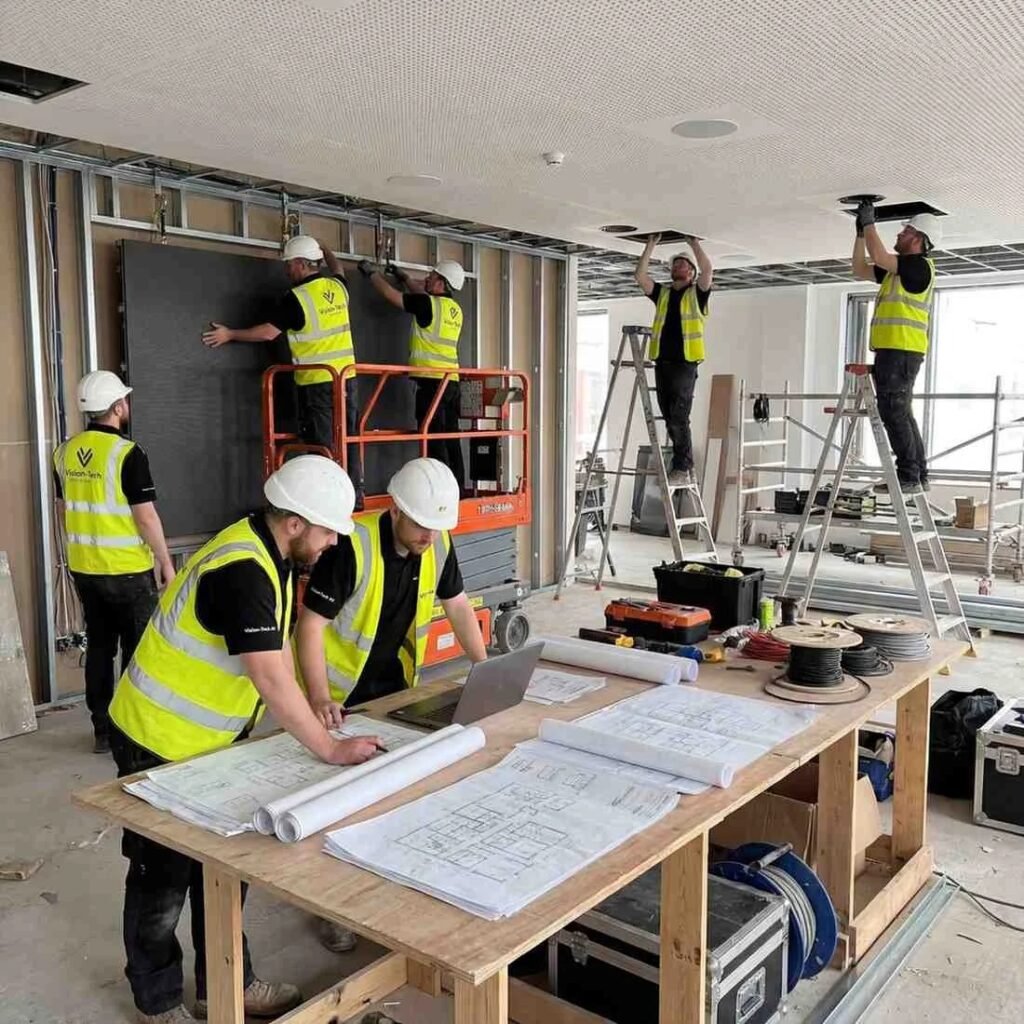
Installation covers mounting displays, running cables, terminating connections, and building racks.
Technicians follow the design documentation instead of improvising on-site. This consistency matters because undocumented changes during installation are the top cause of future troubleshooting headaches.
Commissioning: Making Everything Talk
Commissioning is the step most homeowners and businesses never see, but it is where the system actually comes alive.
Programmers configure control processors, test audio levels, calibrate displays, and confirm every device communicates correctly. A one-touch “Start Meeting” button on a touch panel only works because of the commissioning work behind the scenes.
Ongoing AV Support and Maintenance
Support is not an afterthought. It is a recurring service that protects the client’s investment.
This includes firmware updates, proactive monitoring, remote diagnostics, and on-site service calls when needed. Businesses that skip maintenance contracts often see system failures at the worst possible moment, mid-presentation or mid-meeting.
Step-by-Step: The AV Integration Journey
| Phase | Primary Goal | Typical Duration | Key Output |
| Discovery & Design | Define requirements | 1 to 3 weeks | System drawings, scope of work |
| Procurement | Source equipment | 2 to 8 weeks | Purchase orders, delivery schedule |
| Installation | Physical build | 1 to 4 weeks | Racks, cabling, mounted hardware |
| Commissioning | Programming & testing | 3 to 10 days | Working, tested system |
| Support & Maintenance | Long-term reliability | Ongoing | Service contract, uptime |
A realistic client timeline:
- Week 1: Site survey and needs assessment.
- Week 2 to 3: Design approval and equipment ordering.
- Week 4 to 8: Equipment arrives, installation begins.
- Week 9: Commissioning and staff training.
- Ongoing: Scheduled maintenance visits and remote support.
Why Working with Local Commercial AV Integrators in South Wales Matters
Businesses across South Wales increasingly need AV systems that support hybrid work, client presentations, and multi-site collaboration.
Working with a local integrator means faster response times, better familiarity with regional building types, and easier access to on-site support when something needs attention.
Vision Tech AV manages the entire journey described above, including design, procurement, installation, commissioning, and support, under one roof rather than handing clients off between separate vendors.
FAQ: Common AV Integration Questions
- What is the difference between AV installation and AV integration?
Installation is the physical setup of equipment. Integration includes design, programming, and ongoing support so the system works as one unified experience, not just separate devices in a room.
- How long does a typical AV integration project take?
Most commercial projects take six to twelve weeks from design approval to commissioning, depending on equipment lead times and site complexity.
- Do I need a maintenance contract after installation?
Yes, if uptime matters to your business. Firmware updates and proactive checks catch problems before they cause downtime during a meeting or event.
- What factors affect AV integration pricing?
Pricing depends on room complexity, equipment brands chosen, cabling requirements, and the level of programming needed for automation and control.
- Who provides AV support and maintenance in Llanelli?
We provide ongoing AV support and maintenance in Llanelli, covering remote monitoring, on-site service calls, and system health checks for commercial clients.
- Can an integrator redesign an existing AV system?
Yes. Many projects involve upgrading legacy systems, such as replacing outdated switchers, adding video conferencing capability, or improving audio coverage without a full rebuild.